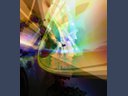
Abstract gallery
In the years after World War II the art movement called Abstract Expressionism dominated the avant garde in New York City. The impact of this new kind of art created by a number of artists was such that it caused a shift in the center of the art world from Paris, which had predominated for a century, to New York City. The New York artists adapted their concepts of painting in abstraction from the German Expressionist school, particularly the work of Wassily Kandinsky and the non-figurative works of Italian Futurists such as Gino Severini and Umberto Boccioni, and as well from the ideas of what is called synthetic cubism exemplified by the works of such European artists as Juan Gris and Georges Braque. The American Abstract Expressionists not only developed their concepts of the look of artworks on the work of European pioneers of abstraction, they also adapted some of the principles of surrealism in developing techniques for the creation of their works. One of the avenues that the Surrealist painters of Europe had explored in the years between the two world wars was the concept that true representations of the images in the mind could be reproduced in paintings and drawings if the artist did not interfere in the process at all. The Surrealists thus developed what they called automatic drawing in which thoughts could be transferred to a surface without the mediation of the artist. For instance André Masson created a number of works that look like doodles which he claimed were direct pictorial reflections of the operation of thoughts in his mind. Americans in general became aware of their homegrown school of Abstract Expressionism through a 1949 article in Life magazine on the artist Jackson Pollock. The readers of Life, who were not initiates into the small world of the avant garde in New York, were teased with the question, "Is he the greatest living painter in the United States?" This provoked a wide discussion over whether Jackson Pollock was a fraud or a genius. Time magazine waded in by calling Pollock "Jack the Dripper". Pollock explained his painting technique and the meaning of his work by saying that he created his work by spreading a canvas on the floor and forgoing the use of a brush, palette knife, used sticks, kitchen knives, trowels and other techniques to drip paint, sometimes containing sand or broken glass and other material, onto the canvas. He said that when he was painting he did not know what he was doing. This is like automatic drawing. It is often called gesture painting. The works of the several artists who were central to the development of Abstract Expressionism in America are not uniform in aesthetic. Each of them followed a different path in exploring the possibilities of painting. Clyfford Still worked in large splashes of colour interrupted by flashes of lighter paint covering his canvases, as did Pollock, with an all over painting effect. Willem de Kooning seemed to race to cover his canvases with broad strokes of paint giving the impression of rawness and sometimes violence. Robert Motherwell painted primarily in black and white with large black forms floating against a white ground and his colleague, Franz Kline, also worked with large dark masses. in this case more like giant brush strokes against a light ground. Aside from gesture in painting these artists worked to fill their canvases and bring attention to the surface qualities of the medium. Another branch of Abstract Expressionism that developed in New York at the time was color field painting. Rather than placing their emphasis on gesture and the stroke of the brush, color field painters utilized large masses of color to affect the eye so that the expression of thought and emotion is carried to the viewer through sometimes amorphous flat and uniform and sometimes more highly defined color forms applied to a uniformly coloured field. Mark Rothko and Adoph Gotlieb said that it was through form and color that they conveyed almost primeval "simple expression of complex thought". Their creation of flat forms emphasized the flatness and substance of the picture plane in a clear recognition of what they were painting was not some three dimensional illusion of the real world. In a sense what they were doing was affirming the fact that their paintings were paintings alone and that they did not reference anything other than the act of painting itself. Both Rothko and Gotlieb were adamant that their work was far from devoid of meaning. If the viewer was willing to be fully engaged in the painted surface the meaning would be revealed in a manner something like the spiritual revelation that came through religious contemplation. Barnett Newman carried this concept to a particularly high level in his sculpture and painting. In his series of 'zip' paintings in which a flat field of colour was divided by a band of another color he renounced the use of the painterly technique practiced by other color field painters. What he used to communicate expression are simple hardedge ribbons of color that appear to float in the viewer's space or behind the picture plane. Through these works Newman peacefully transmitted the simplest, universal and eternal truths. Since the invention of Abstract Expressionism in America, artists around the world have, with various measures of success, tried their hand at the style. Today there are still an abundance of practicing Abstract Expressionists. In the digital arts there are several creators who have attempted to match the qualities of the early Abstract Expressionists through creating colours and manipulating them in form and juxtaposition using electronic tools instead of the manually controlled brushes and other tools available to the founders of their style. What the digital arts have contributed to Abstract Expressionism is a new way of expression through the many novel possibilities of the digital medium.
|
Art and Illustration Studio.
![]()
Receive free monthly updates about new artwork. Choose from email or RSS delivery.
For email updates type in your email address and click submit.
Reflections
The most popular images during the past 365 days: 1. Planet scape 2. Endless opposites 3. Cosmic vista 4. Snowy vista 5. Singular ambience 6. Stellar vista 7. Distant system 8. A million stars 9. Cosmic shores of the subconscious 10. Cosmic awareness
If you'd like to link to my site using a nice banner, this is the place to see.
|